




The Indian pharmaceutical sector has emerged as a global powerhouse in oral solid-dosage manufacturing, driven by advanced technological infrastructure, skilled technical personnel, and robust quality-control systems. Within this landscape, the demand for specialized oral antibiotic formulations continues to grow across acute-care, primary-healthcare, and hospital-supply segments. For pharmaceutical marketing companies, distributors, and growing brands, meeting this market demand requires access to consistent, high-standard production capabilities.
This requirement has led to the widespread adoption of third-party Sultamicillin tablet manufacturing in India. Partnering with a specialized contract manufacturer allows pharmaceutical firms to expand their product portfolios without incurring heavy capital expenditure on dedicated facility construction. Product formulations such as Sulswit – 375, which contains Sultamicillin, highlight how contract production helps brands launch high-quality products efficiently. Companies like Aingo Pharma provide the operational, technical, and regulatory framework necessary to support successful contract manufacturing partnerships.
Sultamicillin is a mutual prodrug of the antibiotic ampicillin and the beta-lactamase inhibitor sulbactam, linked via a chemical ester bond. In pharmaceutical oral solid dosage formulations, this combination is engineered to overcome gastric degradation and improve oral bioavailability compared to simple co-administration of the parent drugs.
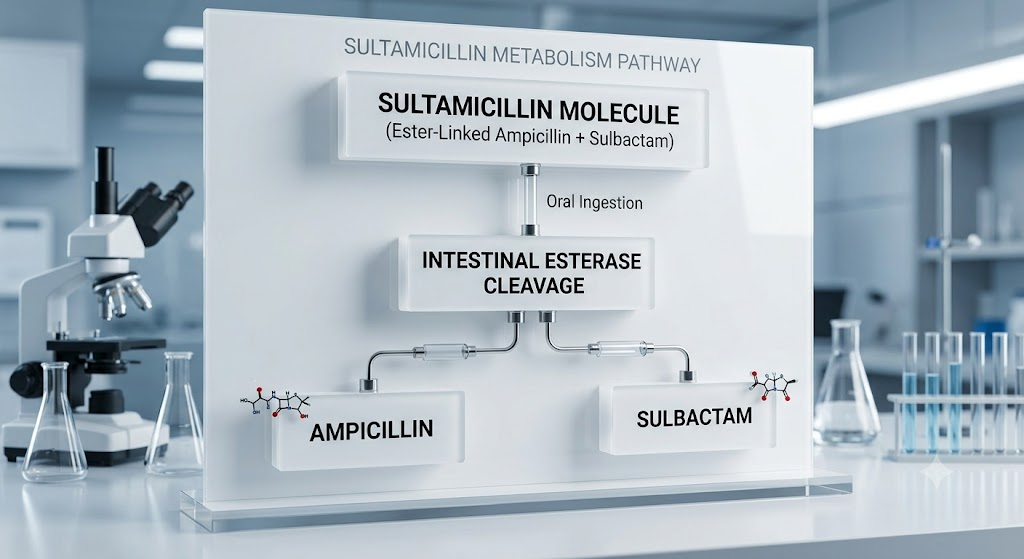
Once ingested orally, the ester bond undergoes enzymatic hydrolysis within the intestinal mucosa, releasing equitable concentrations of ampicillin and sulbactam into systemic circulation. Ampicillin acts primarily by inhibiting bacterial cell wall synthesis, while sulbactam irreversibly binds to and inactivates specific beta-lactamase enzymes produced by resistant bacterial strains.
Formulating Sultamicillin into a stable tablet requires careful attention to:
Third-party pharmaceutical manufacturing, also known as contract manufacturing or toll manufacturing, is a strategic outsourcing arrangement. In this business model, a brand owner contracts an established pharmaceutical manufacturing partner to produce finished dosage forms according to mutually agreed specifications, quality standards, and regulatory guidelines.
In third-party Sultamicillin tablet manufacturing in India, the manufacturing partner handles the end-to-end production process. This includes raw-material sourcing, active pharmaceutical ingredient (API) testing, batch processing, compression, film coating, primary/secondary packaging, and analytical quality testing. The finished product is then delivered to the brand owner under their registered brand name, such as Sulswit – 375.
This arrangement allows pharmaceutical trading firms, regional distributors, and marketing organizations to leverage the infrastructure, technical expertise, and operational scale of an established contract manufacturer like Aingo Pharma without managing daily factory operations.
India’s pharmaceutical manufacturing ecosystem provides specific technical and strategic advantages that make contract manufacturing ideal for high-value formulations like Sultamicillin.
Setting up a dedicated oral solid dosage (OSD) manufacturing facility involves substantial capital expenditure on land, HVAC systems, cleanrooms, tablet presses, and analytical testing equipment. Opting for third-party pharmaceutical manufacturing allows businesses to convert fixed capital costs into variable operational costs, directing funds toward marketing and market coverage.
Leading facilities offering third-party Sultamicillin tablet manufacturing in India utilize automated processing systems. These include high-shear granulators, fluid bed dryers, auto-coaters, and high-speed rotary tablet presses. These advanced production lines ensure consistent tablet hardness, low friability, precise weight variation control, and uniform active constituent distribution.
Market demand for oral solid antibiotics often varies based on regional consumption trends and seasonal factors. Established contract manufacturing partners maintain flexible production capacities, allowing brand owners to scale batch sizes up or down without disrupting operations or holding excess inventory.
Modern contract facilities operate strictly under Good Manufacturing Practice (GMP) protocols. Dedicated quality assurance (QA) and quality control (QC) teams monitor every stage of production—from raw material testing to final finished product testing—ensuring regulatory compliance and product batch consistency.
Contract manufacturers provide various packaging options, such as aluminium-aluminium (Alu-Alu) blisters or high-density polyethylene (HDPE) bottles, tailored to the sensitivity of the active compound. Integrated supply chain management ensures that finished products like Sulswit – 375 are delivered reliably and efficiently.
Within the oral OSD segment, Sulswit – 375 represents a standardized formulation of Sultamicillin tablets (containing 375 mg equivalent active content). Manufacturing a sensitive formulation like Sulswit – 375 requires high precision throughout the production lifecycle.
| Manufacturing Stage | Process Focus & Control Parameters | Key Quality Target |
| API Sourcing & Testing | Purity verification, particle size analysis, moisture content evaluation | Verified identity & strict assay limits |
| Granulation & Blending | Humidity-controlled processing, low-shear mixing | Moisture control & blend homogeneity |
| Tableting & Compression | Weight variation tracking, hardness testing, friability monitoring | Physical tablet integrity & uniform dose |
| Film Coating | Moisture barrier protection, controlled spray rate | Protection against atmospheric degradation |
| Primary Packaging | High-barrier Alu-Alu blister sealing, leak detection | Complete shelf-life moisture protection |
Selecting Aingo Pharma for Third-Party Sultamicillin Tablet Manufacturing in India helps brand owners ensure that products like Sulswit – 375 meet strict physical and chemical stability specifications. Controlled environmental conditions during compression and packaging prevent ambient moisture from compromising product quality.
Selecting a reliable manufacturing partner is essential for maintaining product availability, quality compliance, and brand value. Aingo Pharma operates as a collaborative contract partner committed to technical accuracy, production quality, and clear business communication.

Specialized antibiotic tablets require rigorous quality protocols throughout production to ensure chemical stability, safety, and shelf-life performance.
The quality of the final tablet depends directly on its starting materials. Active pharmaceutical ingredients and inactive excipients must undergo strict receiving inspections, including:
During production, QA technicians perform regular sampling and testing at every stage:
Before release, every batch of Sulswit – 375 undergoes rigorous analytical testing:
Choosing the right partner for third-party Sultamicillin tablet manufacturing in India requires a thorough assessment of technical and operational capabilities.
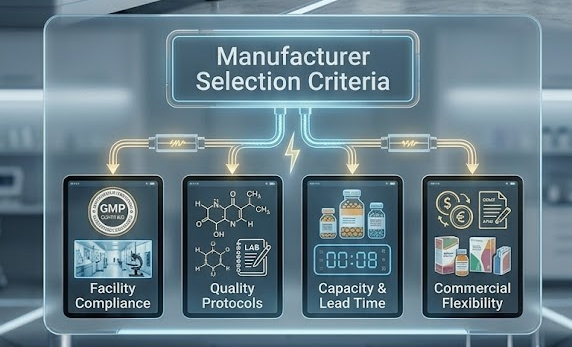
Partnering with an experienced Sultamicillin tablet manufacturer in India offers clear strategic advantages for pharmaceutical distributors and marketing organizations:
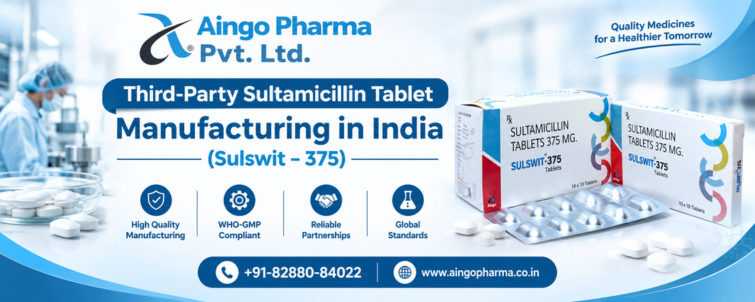
Sultamicillin is a mutual prodrug combining ampicillin and sulbactam via an ester bond. Formulating it into stable tablets requires strict environmental humidity controls and specialized film coatings to preserve stability and prevent moisture degradation.
Third-party manufacturing allows pharmaceutical companies to expand their product catalog without investing heavy capital in dedicated production lines. It grants instant access to cGMP-compliant facilities, automated tableting equipment, and experienced analytical quality control teams.
Due to the moisture sensitivity of Sultamicillin formulations, Sulswit – 375 is typically packed in high-barrier Aluminium-Aluminium (Alu-Alu) blister packaging. This provides an effective barrier against ambient humidity, air, and light to ensure long-term shelf stability.
Aingo Pharma maintains rigorous Quality Assurance (QA) and Quality Control (QC) protocols across all production phases. This includes raw material assay and purity testing, continuous in-process checks (tablet hardness, friability, disintegration time), and final batch analytical validation (HPLC assay, dissolution profiling, and impurity analysis).
Every completed manufacturing batch is supplied with comprehensive regulatory and analytical documentation, including the Certificate of Analysis (COA), Batch Manufacturing Record (BMR) summaries, stability data, and relevant compliance certificates needed for commercial distribution.
Outsourcing production through third-party Sultamicillin tablet manufacturing in India offers pharmaceutical businesses a reliable, scalable, and cost-effective path to market. By leveraging specialized contract manufacturing, companies can supply high-quality formulations like Sulswit – 375 without the capital requirements and operational complexities of running a factory.
Selecting an experienced partner like Aingo Pharma ensures access to structured quality control, consistent batch manufacturing, and full regulatory documentation. Whether you are expanding an established OSD portfolio or introducing new product lines, Aingo Pharma provides the technical expertise and manufacturing infrastructure necessary for sustained commercial success.
Expand your pharmaceutical product portfolio with a trusted partner in third-party Sultamicillin tablet manufacturing in India. Contact Aingo Pharma today to discuss contract manufacturing opportunities, minimum order quantities, and custom packaging options for Sulswit – 375.
